
Citing:
“If your bank still runs business on Oracle Forms in 2026, the calendar is doing your strategy for you. DORA has been fully applicable across the EU, and Oracle’s January 2026 Critical Patch Update shipped fixes for 51 Fusion Middleware vulnerabilities… Legacy Forms estates fail DORA audit scrutiny in three specific areas: they lack the API hooks and log granularity for real-time SIEM monitoring (Articles 9–10), they rely on stateful single-server WebLogic architectures that cannot support modern chaos engineering or RTO/RPO failover testing (Article 11), and their Java SE Universal Subscription charges based on total bank employee headcount, turning legacy maintenance into a ticking financial and audit liability…”
*
*Source. If You want read more: https://pretius.com/blog/oracle-forms-banking-migration
RF21′ comment:
The regulatory reality confronting European financial institutions in 2026 is uncompromising: maintaining legacy Oracle Forms applications is no longer a defensible operational risk. As banking regulators enforce DORA compliance across the EU, attempting to patch un-SIEM-instrumented WebLogic environments or papering over recurring critical security advisories with version upgrades simply creates a paper trail for severe audit penalties. Furthermore, the Java SE Universal Subscription headcount tax turns every non-technical bank employee into an recurring licensing commitment .
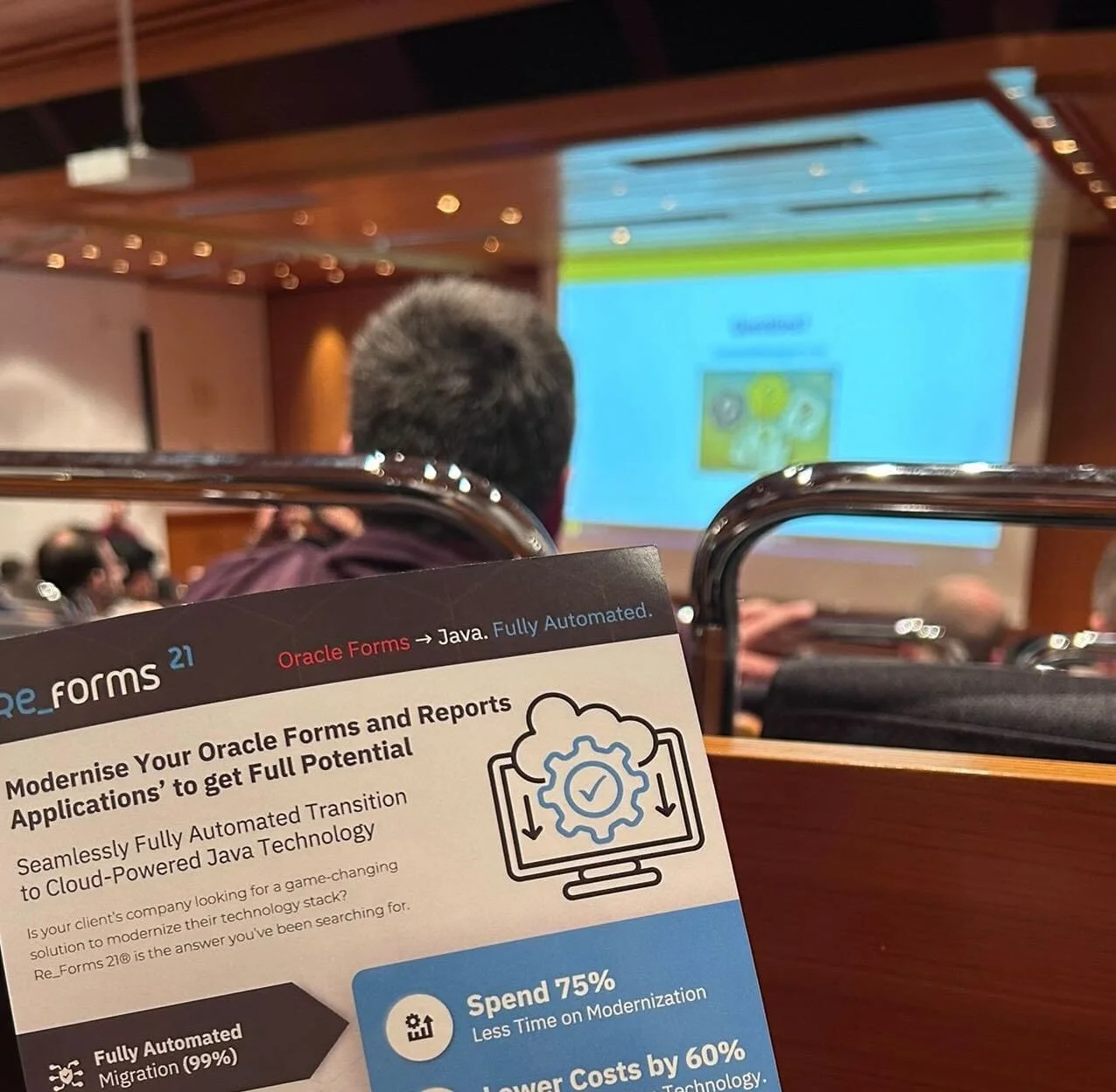
Tinkering with low-code workarounds or partial UI rewrites does not solve the underlying architectural compliance crisis. True operational resilience requires a single-step transition to Architectural Liberty. Driven by the ReML Platform, ReForms21 delivers a fully automated, deterministic transformation of legacy banking layers into clean, containerized Docker/Kubernetes microservices backed by open-source enterprise-grade PostgreSQL. This modern cloud-native stack instantly eliminates WebLogic runtime security exposure , grants native API-first SIEM observability, and fulfills DORA Articles 9–11 requirements for real-time monitoring and high-availability failover—all while completely wiping out Oracle licensing exposure.