
Citing:
“The voice of Oracle Forms is gone. Michael Ferrante — the longtime Product Manager and driving force behind Forms — left Oracle to lead Forms to APEX modernizations at Talan. With the dedicated Forms development team effectively dissolved and no roadmap beyond 14c, Oracle Forms has officially entered sustaining mode… While migrating to APEX is promoted as the comfortable, low-code ‘stay-in-family’ path, it keeps enterprise operations firmly bound to Oracle’s ecosystem…”
*
*Source. If You want read more: https://medium.com/@phamou/oracle-forms-from-champions-exit-to-sustaining-mode-why-2026-demands-a-real-exit-strategy-b799cf778349
RF21′ comment:
Promoting Oracle APEX as a “safe haven” or the default modernization path for Oracle Forms is one of the most expensivecostly misconception in enterprise IT today. While APEX itself carries no standalone tool license fee, the market hype promoted by integrators like e.g. Talan and Broadpin conveniently often overlooks the underlying long-term financial commitments behind this “stay-in-family” narrative. Moving to APEX does not liberate your core—it doubles down on database lock-in by permanently binding your operational existence to Oracle Database and OCI. For enterprise CIOs and CFOs, this approach means navigating ongoing licensing compliance, scaling costs tied to database processor metrics, and potential financial complexities when deploying across multi-cloud environments
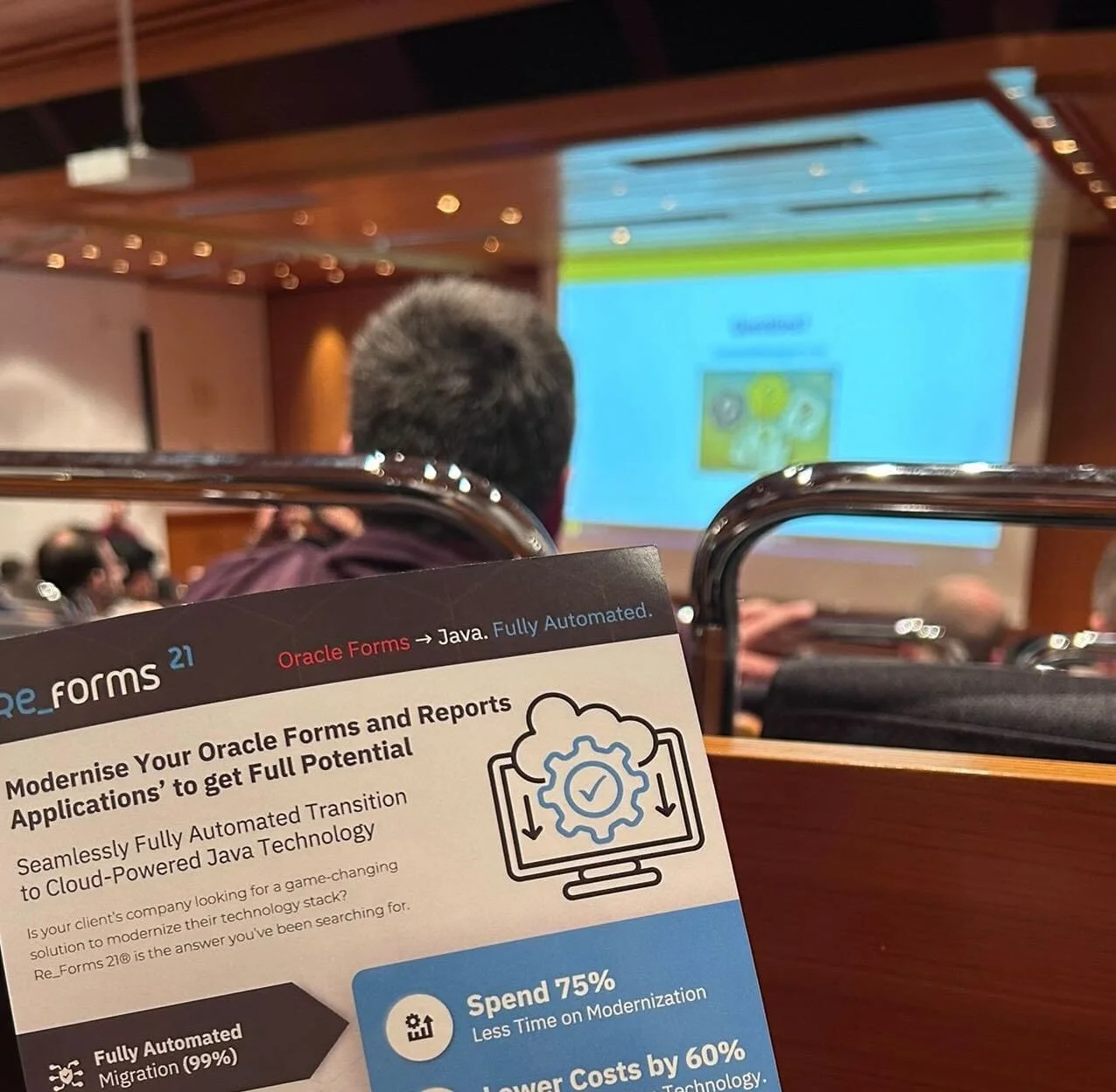
True digital transformation demands Architectural Liberty, not changing the coat of paint on a proprietary cage. ReForms21 dismantles this vendor lock-in through deterministic, compiler-grade automation. Powered by the ReML Platform, we extract 100% of your embedded business logic and transform legacy Forms applications into a modern, clean Java / React stack, fully integrated with open-standard e.g. PostgreSQL. This grants enterprise teams complete cloud autonomy to deploy their core applications anywhere—whether on AWS, Azure, GCP, or on-premises—eliminating proprietary runtime costs and vendor restrictions. Modernizing legacy IT should expand your strategic choices, not trap your infrastructure budget in perpetual proprietary rent.