Deterministic Intelligence
for Enterprise Systems.
Engineering Certainty
Where General AI
Reaches Its Limits.
In mission-critical enterprise systems, a guess is a production incident. ReML replaces the probabilistic uncertainty of generic AI with the mathematical precision of structural automation — decoding your application’s DNA to guarantee 100% business logic fidelity.
Lines of code
migrated & analyzed
Oracle trigger
types covered
Why Generic AI Fails in Mission-Critical IT.
General-purpose AI operates on probability. It predicts the most likely answer based on patterns in training data. In enterprise systems with 1.69 million lines of Oracle Forms–specific logic, “most likely” is not good enough.
WHEN-VALIDATE-ITEM fires before. It cannot trace a PL/SQL
trigger chain across 14 packages. It will not catch Three-Valued Logic
failures. ReML was built precisely because these gaps cause production incidents.
Four Problems That Generic AI Cannot Solve in Your Codebase
These are not theoretical risks. They are the failure modes we observed across the analysis of over 76 million lines of Oracle Forms code.
- Tribal Knowledge Dependency. Critical business logic lives in the minds of three senior developers. When they leave, the system becomes unmaintainable. ReML extracts this logic directly from the code — making it visible to the entire team.
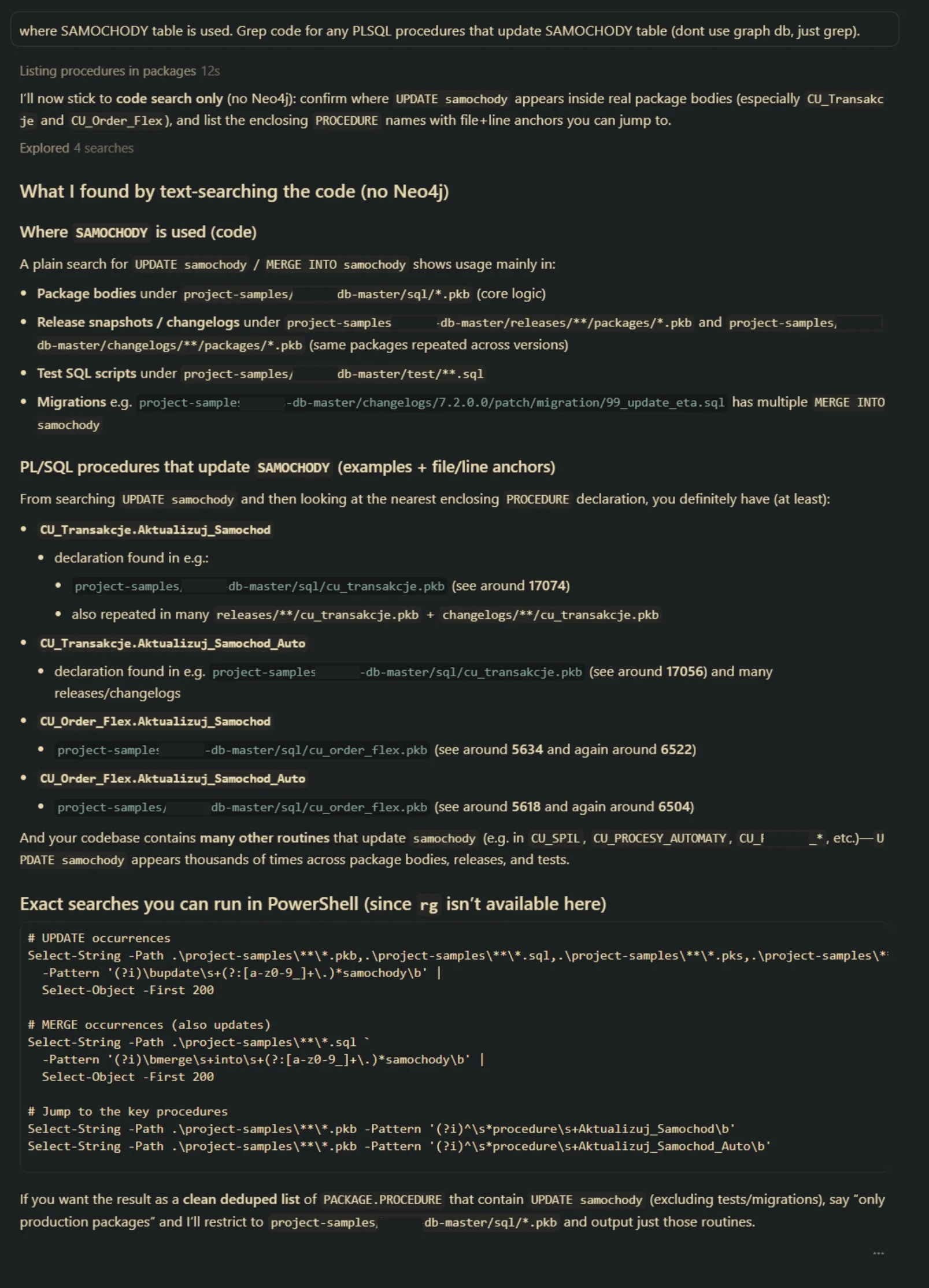
- High-Risk Refactoring Without Visibility. Changing a database column without knowing which 47 procedures and 12 UI forms depend on it. ReML provides deterministic impact analysis before a single line of code is touched.
- Obsolete Documentation. Functional specs are outdated the moment they are printed. ReML maintains living documentation that stays synchronized with the running system and database structures in real time.
- Brittle Test Automation. Traditional scripts break every time the UI changes. ReML's autonomous self-healing mechanisms detect UI element changes and correct test scripts automatically — without manual intervention.
The Digital Twin of Your Application.
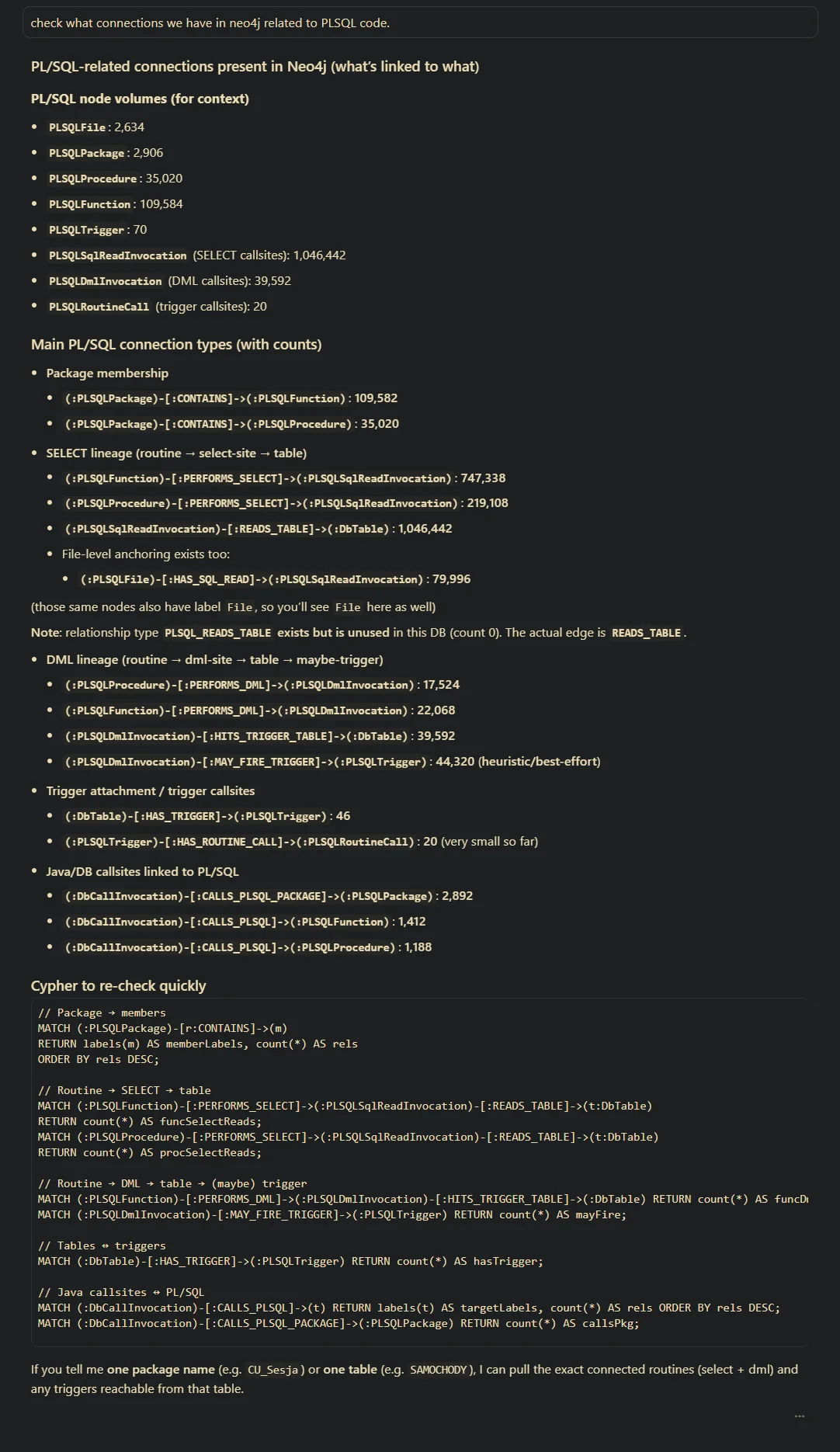
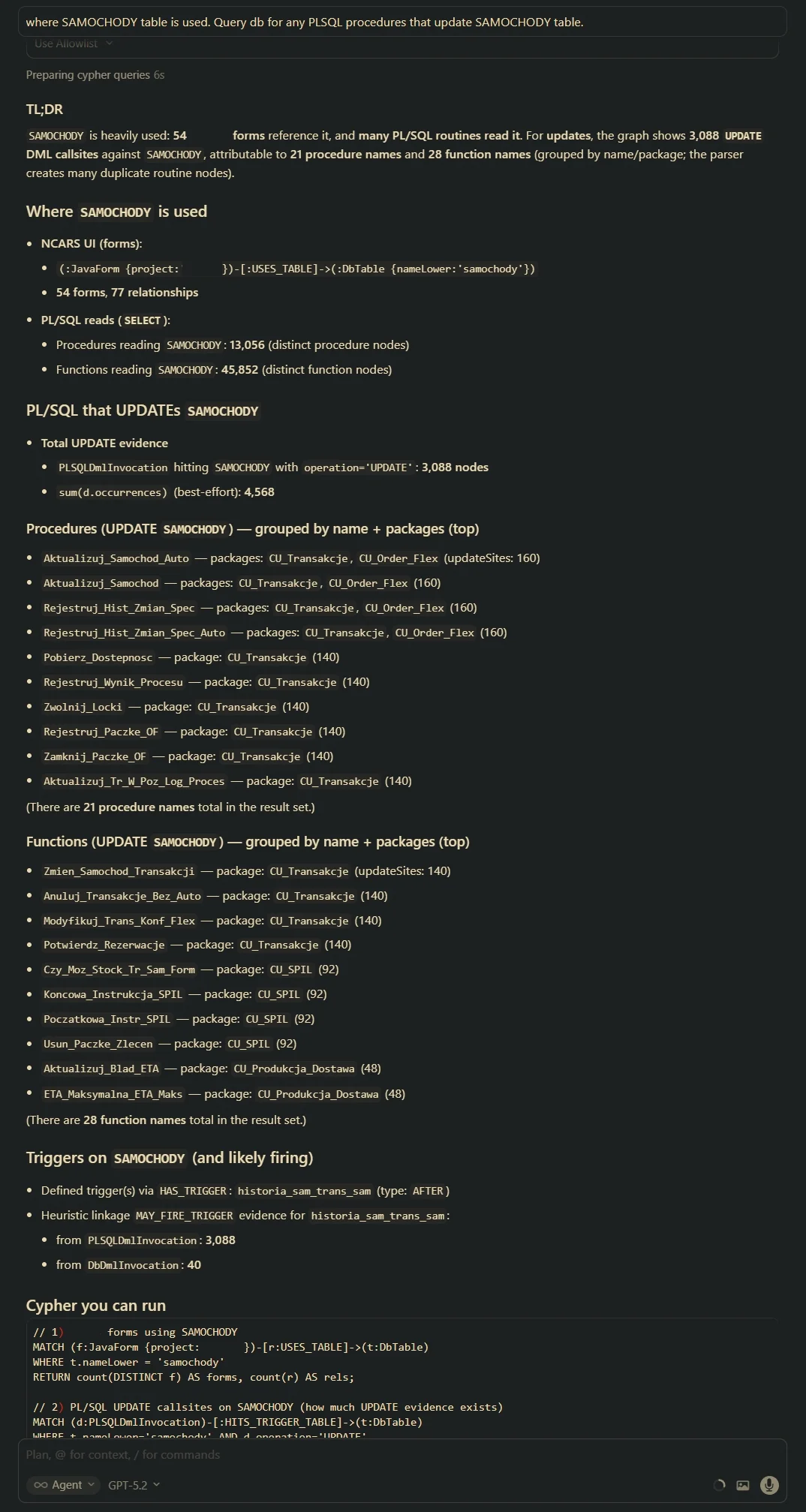
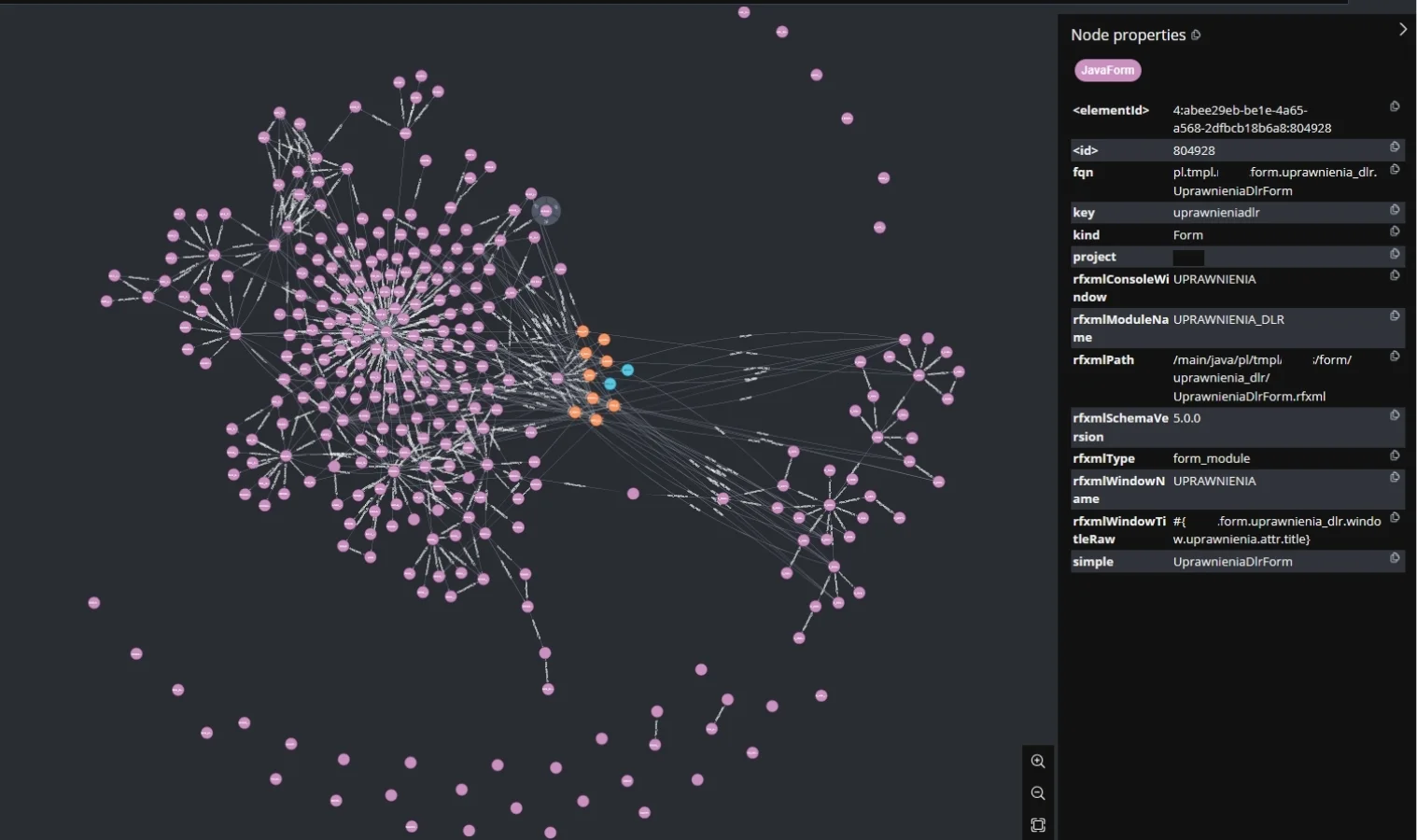
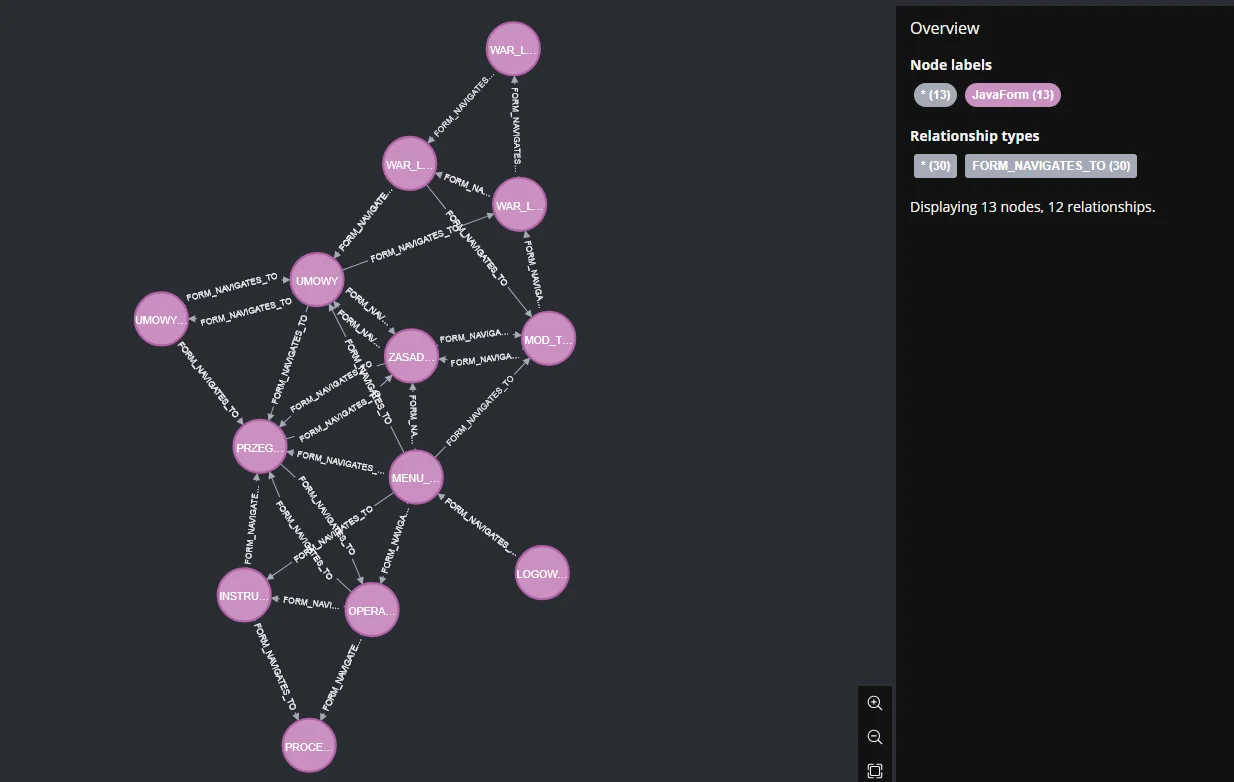
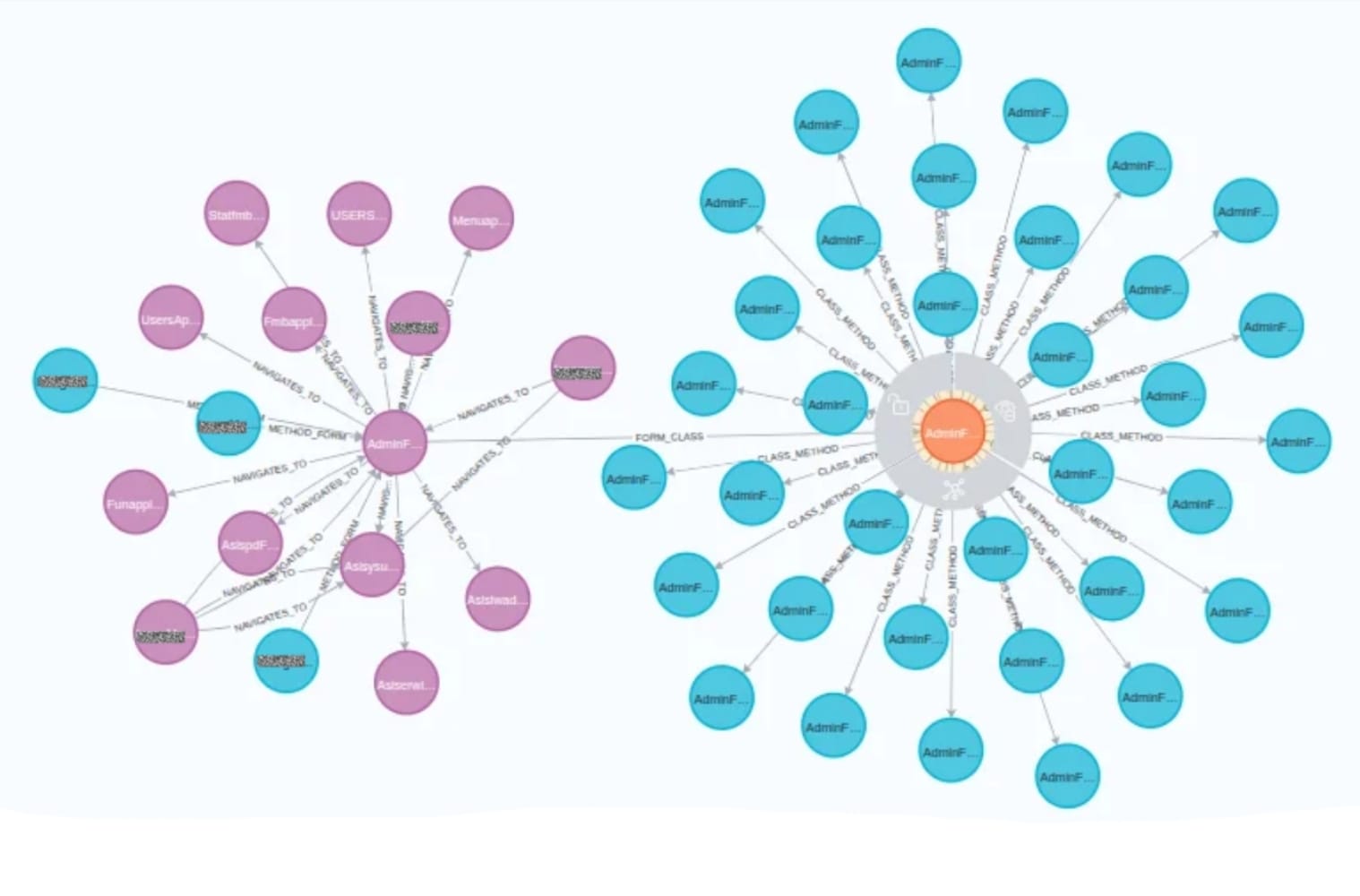
RIB is the central reasoning engine of the ReML suite. It performs forensic static analysis — automatically ingesting source code and database schemas to construct a fully integrated architecture graph of your entire system. Not a summary. A structural map.
What RIB Gives You That No Documentation Can
These are not theoretical risks. They are the failure modes we observed across the analysis of over 76 million lines of Oracle Forms code.
Forensic Static Analysis
Automatically ingests source code and database schemas. Maps every form block, trigger, procedure, package, and table relationship into a unified dependency graph — without requiring any manual annotation.
Deterministic Impact Analysis
Know exactly which procedures, packages, or UI components will be affected by a database change. The system traces data lineage from the interface down to the deep PL/SQL logic — before a single line of code is written.
Living Documentation
Functional specifications that stay synchronized with the running system and database structures. When the code changes, the documentation changes. No manual updates. No drift between spec and reality.
Guided PL/SQL → Java Migration
An AI-assisted workflow for extracting logic from the database into maintainable Java code. Preserves the original developer's intent while ensuring the new code meets modern enterprise standards — and validates against the RIB graph.
Runtime Evidence.
Not Assumptions.
RTA is the runtime evidence layer of the ReML suite. It captures actual system behavior in real time — bridging the gap between how an application was originally built and how it is actually used by your employees today. Every test scenario is grounded in reality, not in what the specification says should happen.
What RTA Gives You That Static Analysis Cannot
RIB maps the architecture. RTA validates the behavior. It captures what your system actually does under real operating conditions — not what the code says it should do.
Real-Time Session Capture
Observes actual user interactions with the running system. Captures the behavioral surface that the code produces in production — including edge cases that no specification anticipated.
Playwright Script Bootstrapping
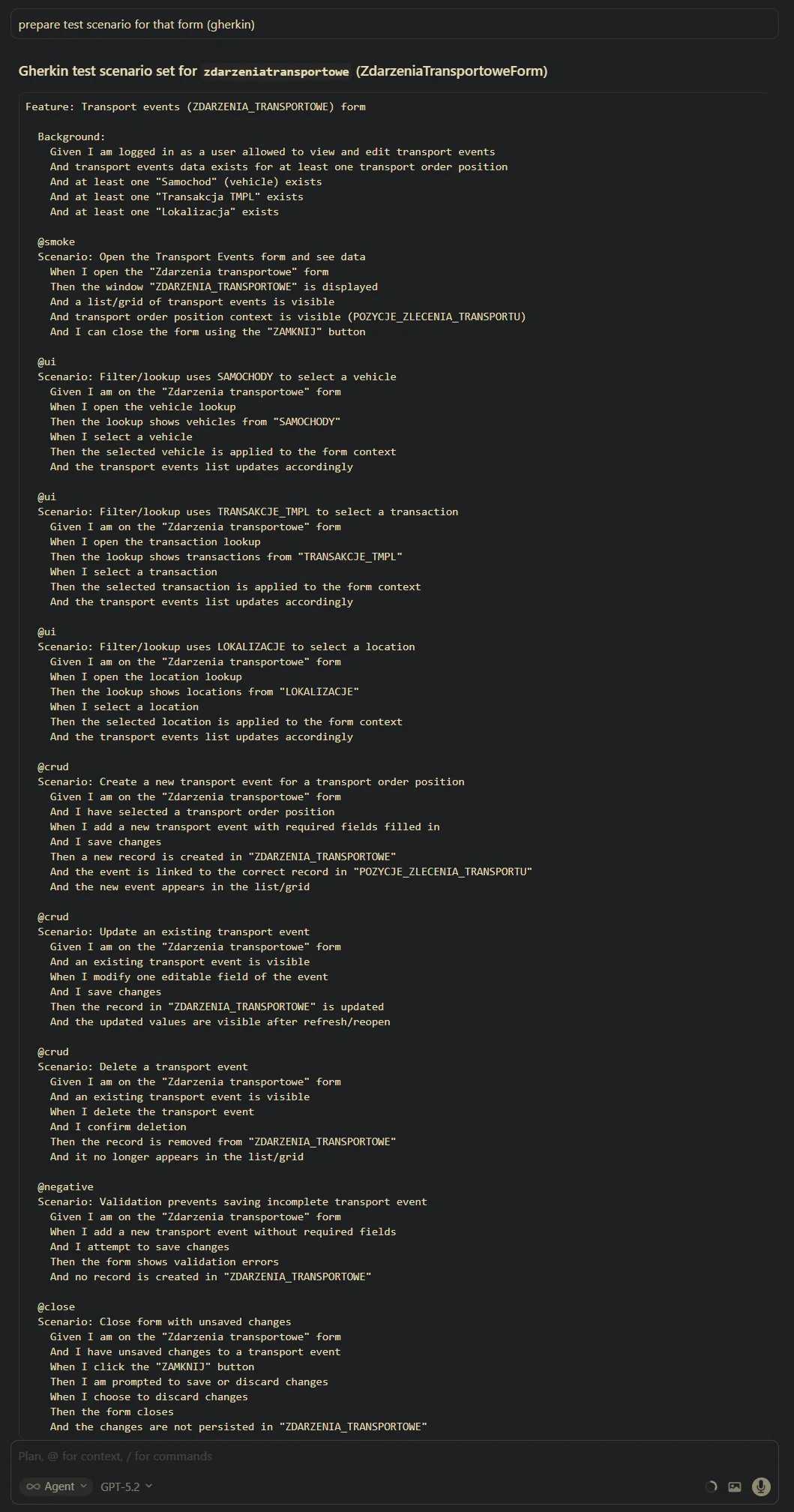
Converts captured sessions into robust, automated Playwright test scripts instantly. Enables rapid assembly of regression packs for the most critical business processes — without a single line of manual test code.
Business-Readable Gherkin Output
Automatically generates Gherkin-format scenario documentation from execution traces. Business stakeholders can read and validate test coverage without touching the codebase.
Autonomous Self-Healing
When UI elements change in the migrated application, RTA detects the change and corrects test selectors automatically. Regression packs stay current without manual maintenance overhead.
RIB + RTA: The Map and the Evidence.
Neither RIB nor RTA alone delivers Engineering Certainty. The true value is found in the closed-loop feedback between the two. Every architectural insight is backed by runtime evidence. Every test scenario is context-aware. Together, they eliminate the gap between what the system is designed to do and what it actually does.
RIB — The Map
Reforms Information Base
The structural model. A forensic, deterministic graph of every dependency, trigger, and data flow in your system.
- Knows what every component depends on
- Predicts impact before any change
- Feeds architectural context into RTA
- Grounds AI code generation in your codebase
RTA — The Evidence
Reforms Test Assistant
The behavioral proof. Real execution traces that validate what the system actually does under real operating conditions.
- Captures what users actually do
- Generates tests from real behavior
- Validates RIB's architectural predictions
- Keeps regression packs current automatically
1+1=3
Measured. Validated. Proven.
ReML is not a prototype. It is the culmination of years of intensive research applied to real enterprise codebases at scale. The quality indicators below are not marketing targets — they are the measurable thresholds our R&D program was required to meet and demonstrate.
Metric W1 — Path Coverage
Execution Path Generation
Automatic generation of at least 80% of all possible execution paths within the system — without manual test case authoring.
Metric W2 — Logic Correctness
Business Logic Accuracy
Logical and business correctness of generated scenarios exceeding 80% — validated against the original Oracle Forms behavioral specification.
Metric W3 — Style Compliance
Enterprise Convention Compliance
Compliance with enterprise naming conventions, code structure, and stylistic standards at 80% or higher — ensuring maintainability from day one.
R&D Grant — Post-Migration Value Generation
 EU
grant focused specifically on post-migration value generation for Oracle Forms environments. This funding supported the development of RIB, RTA, and the ReML engine across a corpus of over 76 million lines of migrated enterprise code — producing the W1, W2, and W3 quality metrics as independently verifiable proof of platform maturity.
EU
grant focused specifically on post-migration value generation for Oracle Forms environments. This funding supported the development of RIB, RTA, and the ReML engine across a corpus of over 76 million lines of migrated enterprise code — producing the W1, W2, and W3 quality metrics as independently verifiable proof of platform maturity. The Precisely Ordered System of Oracle Events — Fully Mapped.
ReML understands the precise firing order of Oracle Forms’ event system — covering 120 out of 125 trigger types. This is not pattern-matching. It is structural knowledge of the Oracle Forms runtime, encoded into the transformation engine. Additionally, ReML uses specialized Java types (SqlVarchar, SqlRecord) to maintain Three-Valued Logic (3VL) — preventing the subtle NULL-handling errors that typically emerge during manual code rewrites.
Built for Teams That Cannot Afford to Be Wrong.
ReML is not a general-purpose tool. It is designed for specific roles operating under specific pressures — where the cost of a logic error is measured in production incidents, regulatory risk, and organizational credibility.
CTOs & IT Directors
Leaders aiming to reduce technical debt, eliminate logic locked in expensive-to-maintain Oracle databases, and establish a safe evolution path for post-migration systems — without betting the organization on a black-box AI tool.
System Architects
Engineers who need a precise, navigable model of a legacy system's cross-layer dependencies before designing any modernization or refactoring strategy. RIB provides the architectural map that no documentation has.
L3 Support & Maintenance Teams
Engineers who need to rapidly diagnose, reproduce, and fix production bugs in complex legacy environments — where the root cause is buried in a PL/SQL trigger chain that nobody documented and the original developer has left the company.
QA Automation Engineers
Professionals looking to scale regression coverage by orders of magnitude without the manual grind of writing scripts from scratch — and without the constant maintenance burden of scripts that break every sprint.
Stop Guessing.
Start Engineering.
The best way to evaluate ReML is to apply it to your actual codebase. Every engagement begins with a Structural Audit — a concrete analysis of your system’s architecture, trigger inventory, and dependency graph. No commitment. No generic demo. Real output about your real system.
Book a Structural Audit
We analyze your codebase and deliver a concrete roadmap for safe modernization — including trigger inventory, dependency map, and risk profile.
Schedule a ReML Demo
Watch RIB and RTA explain complex system flows and generate documentation in real time — on a representative module from your environment.
Request a Proof of Concept
See how ReML handles your most complex Oracle Forms module. Delivered in days, not months. Measurable against the W1–W3 quality indicators.